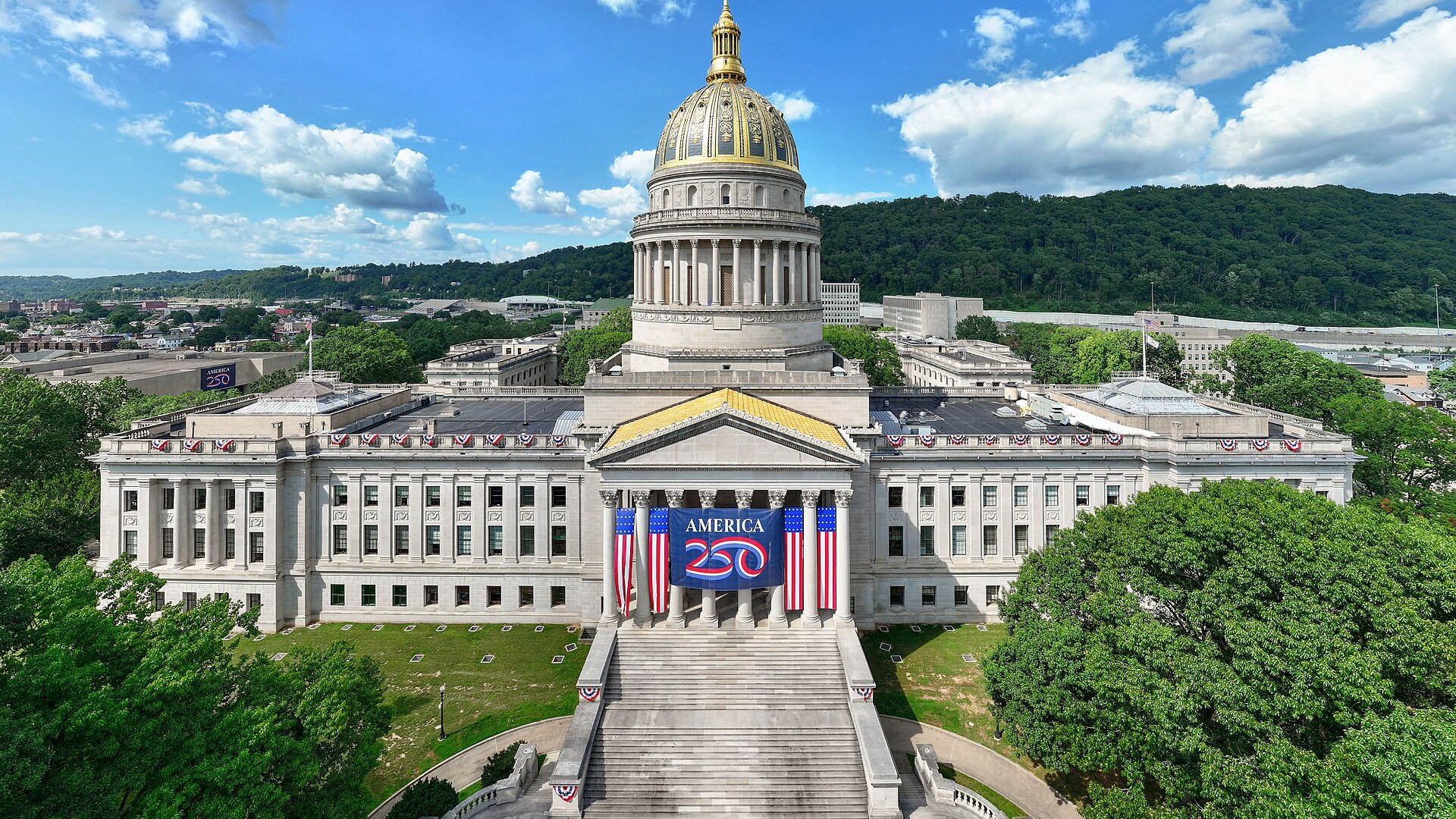
Photo: West Virginia State Capitol in Charleston. Quintin Soloviev via Wikimedia Commons (CC BY 4.0).
West Virginia Attorney General JB McCuskey has withdrawn the subpoenas his office issued to two environmental groups, closed his investigation of them and adopted a written policy promising not to repeat it. The reversal came after a federal judge in Charleston found the demands likely violated the First Amendment. The groups, the West Virginia Rivers Coalition and 350.org, say that is not enough and want the court to rule on whether the subpoenas were unconstitutional.
McCuskey gave the organizations until Wednesday, Nov. 25, to agree to dismiss their lawsuit. If they refuse, he plans to ask the court to throw out the case as moot. The groups have signaled they will not agree, according to Mountain State Spotlight and the Associated Press.
What the subpoenas demanded
McCuskey’s office issued the subpoenas on Sept. 16 under the state’s consumer protection law, the West Virginia Consumer Credit and Protection Act. Legal Newsline reported the demands contained 16 separate requests reaching back to Jan. 1, 2017. They sought the groups’ statements about climate change, internal deliberations, fundraising appeals, scientific materials and their relationships with other organizations and renewable energy businesses.
The office said it was examining whether the groups had misled supporters. Mountain State Spotlight reported the question was whether they overstated the harm of ordinary fossil fuel use to attract donors. West Virginia Watch reported that the investigation was initially tied to concern that the groups’ activities could hurt the state’s coal and gas industries, and that the office later argued in court that the groups raised money based on an outdated study.
In an October filing, McCuskey argued that the First Amendment “is not a license to lie,” Legal Newsline reported. On Oct. 26, his office dropped its demand for the names of the groups’ donors.
A judge steps in
The Rivers Coalition and 350.org sued in the U.S. District Court for the Southern District of West Virginia on Oct. 22. Represented by Appalachian Mountain Advocates, they argued that the attorney general was stretching a law meant for commercial transactions to investigate political advocacy and to retaliate against critics of fossil fuel development.
On Oct. 29, U.S. District Judge Joseph R. Goodwin granted a temporary restraining order. He found the groups were likely to win on their claim that the demands violated their First Amendment right of association. Goodwin rejected the argument that the groups’ advocacy amounted to commercial activity under the consumer law, and he said dropping the donor request did not fix the problem because the remaining demands still reached coalition partners, board ties and private discussions, according to Legal Newsline.
Goodwin did not mince words. West Virginia Watch reported that he described the demands as a fishing expedition and wrote that McCuskey had “brought dynamite to the lake.” Mountain State Spotlight reported the judge also placed the subpoenas within a wider pattern of state and federal investigations aimed at nonprofit groups.
The order had a real effect on the groups’ work. Legal Newsline reported that the Rivers Coalition paused a community mini-grant program and the release of online story maps, while 350.org changed or held back communications and stopped starting new work in West Virginia while the inquiry was pending.
The reversal
On Nov. 20, McCuskey sent the groups’ lawyers a letter withdrawing the subpoenas in full and closing the investigations. According to Legal Newsline, the letter says his office reserves no right to reissue the subpoenas, in their original form or narrowed, and that the groups have no obligations under them. Mountain State Spotlight reported he also took back an earlier statement suggesting more subpoenas could follow and adopted a formal written policy against similar action.
West Virginia Watch reported that the policy commits the office and its current and future officers, and that the office will not open new investigations into the groups’ public education on climate change. McCuskey said his office would keep enforcing the consumer protection law, but not in a way that conflicts with the Constitution. He attributed the decision to enforcement priorities and limited resources.
Mountain State Spotlight reported that McCuskey also issued and then withdrew investigative subpoenas to the Sierra Club and the West Virginia Citizen Action Education Fund. Dani Parent, executive director of the Citizen Action Education Fund, said nonprofits must be able to speak and educate without fear of becoming targets of government investigation, West Virginia Watch reported.
Why the groups want a ruling anyway
If both sides agree to dismiss the case as moot, it ends with no winner, no loser and no court finding on whether the subpoenas were lawful. Mountain State Spotlight noted that outcome would leave the door open for the attorney general’s office to launch similar investigations later. The groups have said that if McCuskey moves to dismiss, they will ask Goodwin for summary judgment, a ruling on the merits.
Rivers Coalition Executive Director Jennie Smith said in a press release last month that the subpoena was meant to stifle the group’s voice and advocacy, Mountain State Spotlight reported.
What it means for West Virginia
The fight goes to the heart of how far a state attorney general can push consumer protection law. West Virginia’s statute gives the attorney general broad investigative power over deceptive business practices. A final ruling that the subpoenas crossed a constitutional line would limit how future attorneys general can use that power against advocacy groups. A dismissal without a ruling would leave that question open.
It also matters for civic groups across the state. Environmental, labor and community organizations in West Virginia often operate on small budgets, and the Rivers Coalition and 350.org both scaled back programs while the subpoenas were in force. Mountain State Spotlight has reported that McCuskey has argued opposition to fossil fuels harms West Virginia’s economy, a theme that runs through his office’s actions on energy.
What happens next
- Nov. 25: Deadline McCuskey set for the groups to agree to dismissal. They have indicated they will not.
- Motion to dismiss: McCuskey has said he will ask the court to toss the case as moot if the groups do not agree.
- Summary judgment: The groups plan to ask Goodwin to rule on whether the subpoenas violated the First Amendment.
- Dec. 17: The temporary restraining order, extended by agreement, runs through 4 p.m. that day, along with a bar on discovery requests, according to Legal Newsline.
Sources
- Mountain State Spotlight: McCuskey withdraws subpoena in Rivers, 350 lawsuit
- AP News: West Virginia AG withdraws demands for documents and asks to drop lawsuit
- West Virginia Record: McCuskey withdraws climate subpoenas, but lawsuit remains
- West Virginia Watch via Yahoo News: West Virginia Attorney General backs down from environmental groups investigation