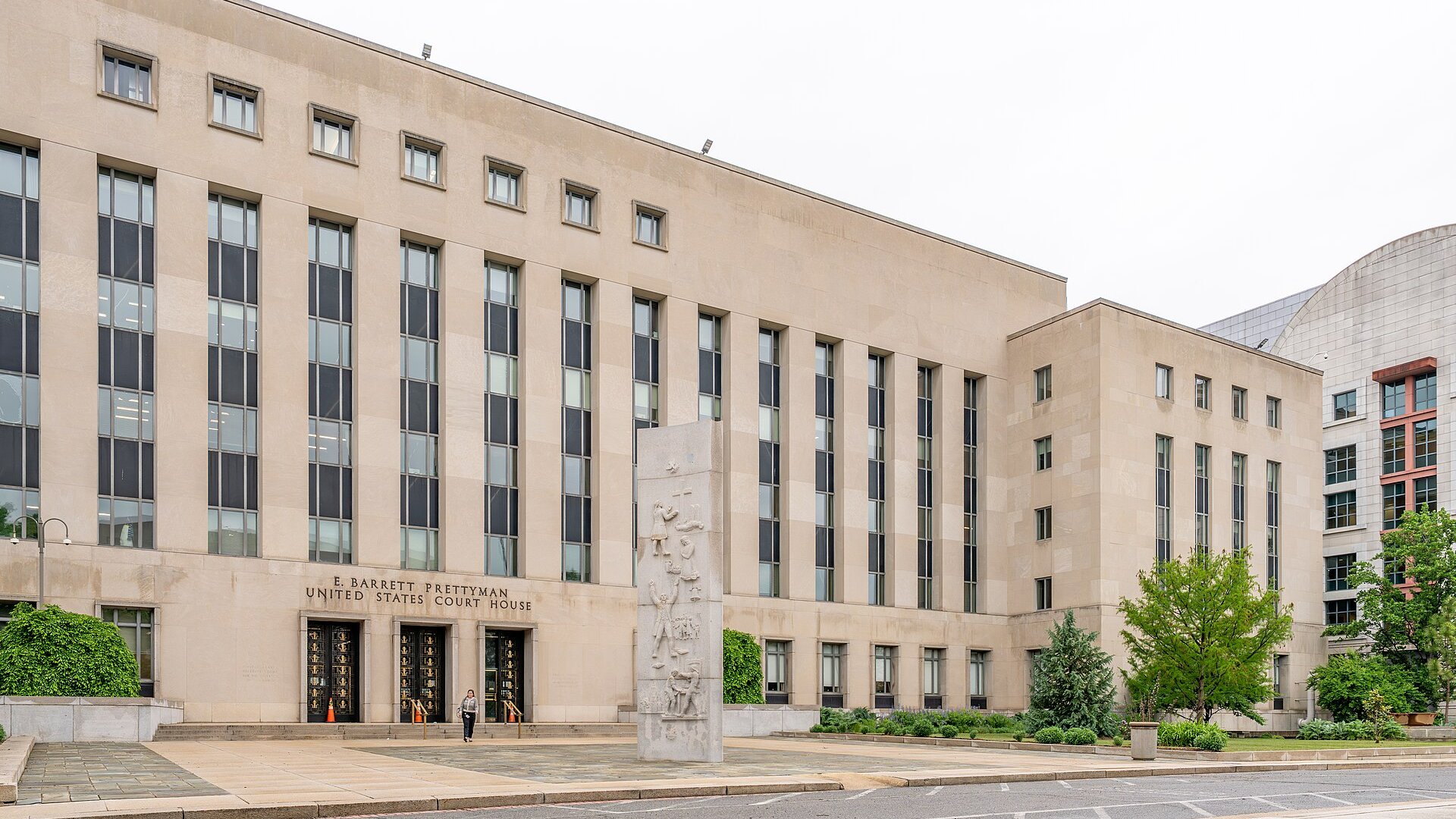
Photo: The E. Barrett Prettyman U.S. Courthouse in Washington, D.C. ajay_suresh via Wikimedia Commons (CC BY 4.0).
Four anonymous social media users are asking a federal judge in Washington, D.C., to shut down what they describe as a secret Justice Department effort to identify people who criticize Immigration and Customs Enforcement online. Their class action, unsealed this week, says prosecutors have sent grand jury subpoenas to Meta, X and Bluesky seeking the names and personal details behind critical accounts.
The case was filed under seal on Nov. 16 in the U.S. District Court for the District of Columbia. Chief Judge James Boasberg ordered it unsealed on Wednesday, and the plaintiffs placed public versions of the complaint and a motion for a preliminary injunction on the docket Friday, according to the American Civil Liberties Union, which represents them along with the ACLU of DC and the ACLU of Northern California.
The named defendants are U.S. Attorney for the District of Columbia Jeanine Pirro, Attorney General Todd Blanche and Homeland Security Secretary Markwayne Mullin. Spokespeople for the Department of Homeland Security and Pirro’s office did not immediately respond to requests for comment from The Associated Press.
What the lawsuit claims
According to the filings, Pirro’s office refers to the effort internally as “Investigation 18.” The plaintiffs point to 35 grand jury subpoenas tied to it so far and argue the real total is likely much higher. The subpoenas covering the four plaintiffs went to Bluesky, X and Meta.
The complaint argues the investigation violates the First Amendment, which protects political speech including anonymous criticism of the government, and the Fourth Amendment, which bars unreasonable searches and seizures. It calls the probe “a bad-faith fishing expedition” meant to gather intelligence on dissenters and punish them for what they post, the AP reported.
The plaintiffs are suing under pseudonyms. One is a Bluesky user who responded to an ICE-related shooting in New York with a post calling for ICE and DHS to be burned to the ground. Another is a college student whose posts on X included profanity aimed at DHS, ICE and President Donald Trump. Because the suit is a class action, it asks the court to protect not only those four but anyone whose identifying information has been or will be sought through Investigation 18.
The ACLU wants a preliminary injunction that would halt the investigation and bar the government from forcing the companies to hand over user data while the case proceeds.
Why grand jury subpoenas matter
Grand jury subpoenas carry the weight of a criminal investigation, but in practice they are usually drafted and issued by prosecutors, not by grand jurors, and a judge does not review them before they go out. They are also covered by secrecy rules. That makes them harder for the target of a request to learn about, let alone challenge.
The ACLU argues the government turned to this tool after running into resistance on another front. Over the past year, DHS has sent hundreds of administrative subpoenas to technology companies seeking information about online critics of ICE, the group says. Those subpoenas are issued by federal agents without a judge’s approval, and the ACLU and its state affiliates have filed several motions to quash them.
That earlier campaign became public in February, when The New York Times reported that DHS had sent hundreds of administrative subpoenas to Google, Reddit, Discord and Meta asking for names, email addresses and phone numbers tied to accounts that criticized ICE or reported where its agents were operating. Some companies complied with some requests. In one case covered at the time, Meta told users who posted about ICE activity in Montgomery County, Pennsylvania, that it would turn over their information unless they showed within 10 days that they were fighting the subpoena in court.
Pirro’s office had already used grand jury tools in this area before Investigation 18 surfaced. In May, Bloomberg News reported that her office had subpoenaed Reddit and X for the names, addresses and banking information of at least two anonymous posters who had criticized immigration enforcement, as part of criminal investigations.
Key dates and numbers
- Nov. 16: Lawsuit filed under seal in federal court in Washington.
- Nov. 25: Judge Boasberg orders the case unsealed.
- 35: Grand jury subpoenas the plaintiffs tie to Investigation 18 so far.
- 3: Platforms that received subpoenas for the named plaintiffs: Meta, X and Bluesky.
- Dec. 14: Deadline for the government’s written response.
- Jan. 6: Hearing on the request for a preliminary injunction.
What each side is saying
The ACLU frames the case as the first broad civil challenge to the administration’s use of grand jury subpoenas to unmask critics, and the first that will play out in public. Laura Follansbee, a staff attorney with the ACLU of DC, called the practice “an alarming abuse of power” and said it chills speech well beyond the four plaintiffs. Lawyers in the complaint also cite what they call repeated suggestions that the government is building a database of dissenters.
The government has not yet answered the allegations in court. Prosecutors generally have wide latitude to gather records through a grand jury, and the administration has defended aggressive immigration enforcement as a core priority. Its formal position on Investigation 18, including what crimes, if any, prosecutors say they are investigating, is expected in the Dec. 14 filing.
What it means for social media users nationwide
Although the case sits in a Washington courtroom, its reach is national. The platforms involved serve users in every state, and the class the ACLU wants certified would include anyone targeted by Investigation 18, wherever they live. A ruling for the plaintiffs could limit how far federal prosecutors can go in using grand juries to identify anonymous posters. A ruling for the government could make that route easier to use against online speech about immigration enforcement.
For users, the practical stakes are about notice and time. Platforms often tell people when their data has been requested, unless a court order forbids it, and give them a short window to object. Grand jury secrecy can shrink or eliminate that window. The outcome may also shape how companies like Meta, X and Bluesky respond to future demands, since they are the ones who decide whether to comply, push back or notify users.
What happens next
The Justice Department and DHS have until Dec. 14 to respond in writing. Judge Boasberg has set a Jan. 6 hearing on the request for a preliminary injunction. Until he rules, the subpoenas remain in effect, and it is not publicly known how much user data, if any, the companies have already turned over. Any ruling could be appealed to the U.S. Court of Appeals for the D.C. Circuit.
Sources
- ACLU of DC: Lawsuit Alleges Sprawling Federal Grand Jury Investigation into Anonymous ICE Critics Online
- The Associated Press (via WPLG): ACLU seeks court order blocking Trump administration’s efforts to unmask ICE critics on social media
- Al Jazeera: US civil rights group challenges ICE subpoenas as attack on speech
- Engadget: Homeland Security has reportedly sent out hundreds of subpoenas to identify ICE critics online
- Bloomberg Law: DOJ Wants to Know Who on Reddit, X Criticizes ICE’s Tactics