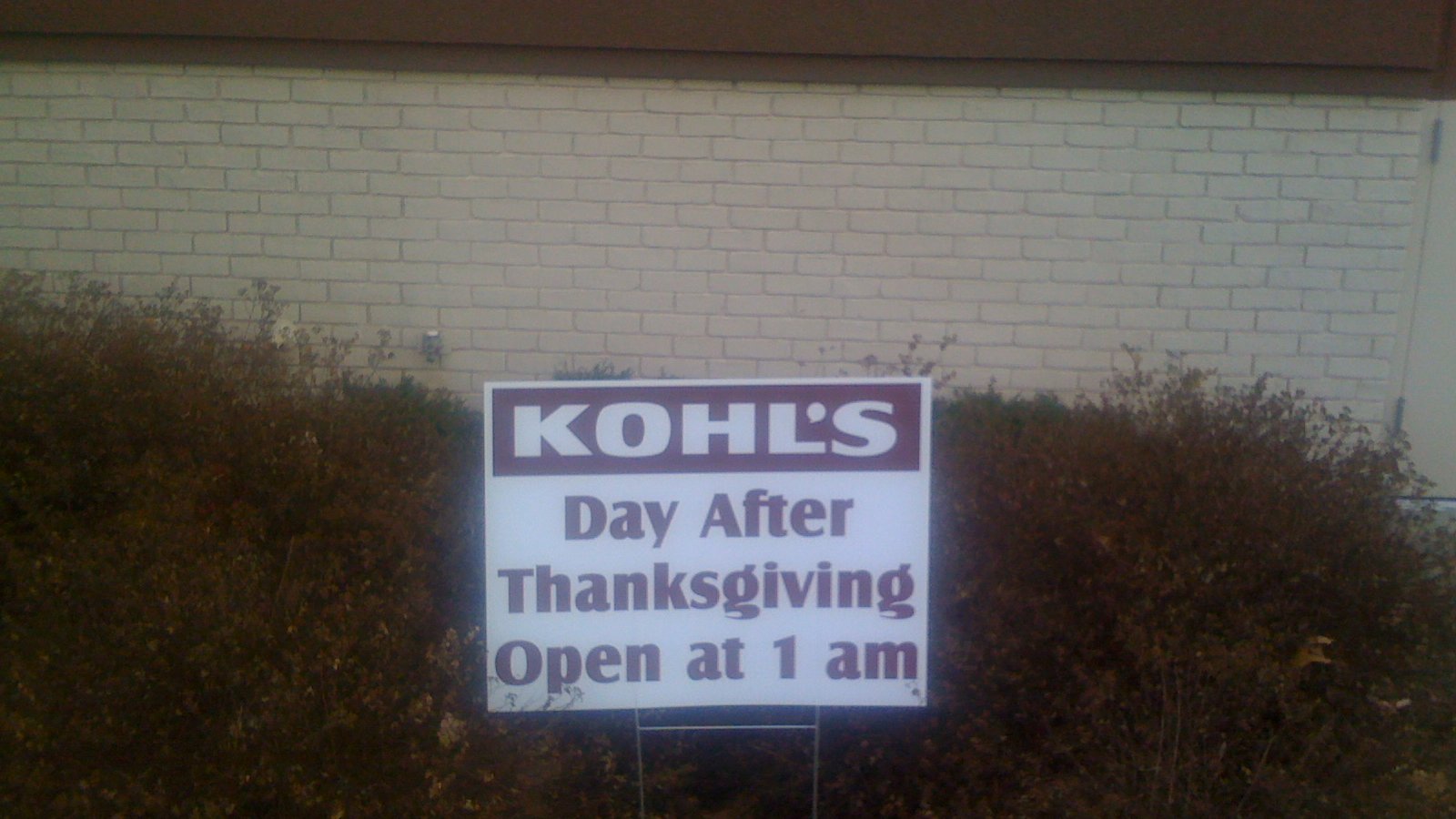
Photo: Black Friday sign at a Kohl’s store in Massachusetts. Clare Lovell via Wikimedia Commons (CC BY-SA 3.0).
Americans spent a record $7.1 billion online on Thanksgiving Day, up 10.4% from a year earlier, according to Adobe Analytics, as the holiday shopping weekend opened with strong digital demand despite inflation running near 4%. The Thanksgiving total beat Adobe’s own $6.9 billion forecast, and the company expects Black Friday on Nov. 27 to set another record.
Adobe projected that U.S. shoppers would spend $12.9 billion online on Black Friday, a 9.2% increase from the $11.8 billion recorded in 2025. Adobe’s final Black Friday tally had not been widely reported when this story was published. In stores, early reads were more modest but steady, with mall operators reporting slightly bigger crowds than last year.
The numbers matter well beyond the retail industry. Holiday sales make up a large share of annual revenue for many retailers, and they feed directly into sales tax collections that states use to fund schools, roads and health programs.
The key numbers
- $7.1 billion spent online on Thanksgiving Day, up 10.4% (Adobe)
- $12.9 billion forecast for Black Friday online spending, up 9.2% (Adobe)
- $82.5 billion spent online from Nov. 1 to Nov. 22, up 9.1% (Adobe, via the Associated Press)
- $275.1 billion forecast for online spending over the full Nov. 1 to Dec. 31 season, up 6.7% (Adobe)
- $15.1 billion forecast for Cyber Monday, which would be the first U.S. shopping day above $15 billion (Adobe)
- 182.7 million people expected to shop over the five days from Thanksgiving through Cyber Monday (National Retail Federation)
Adobe expects the five days from Thanksgiving through Cyber Monday, which it calls Cyber Week, to bring in $47.5 billion online, up 7.4%, according to figures reported by The Epoch Times.
Inflation is shaping what goes in the cart
This year’s season is unfolding against stubborn price increases. The Commerce Department’s preferred inflation gauge, the personal consumption expenditures price index, showed prices up 3.8% from a year earlier in October. That backdrop is changing both how retailers discount and what shoppers buy.
Adobe found that online purchases of everyday necessities jumped in November. Compared with the October average, sales of personal hygiene products were up 40%, household cleaning supplies 33% and basic clothing 27%, the Associated Press reported. Adobe analysts said shoppers appear to be using holiday promotions to stock up on items they would buy anyway.
Discounts have deepened to keep pace. Adobe expected televisions to be marked down about 23% on Black Friday, roughly double the 11% average discount over the first three weeks of November. Salesforce, which tracks shopping across thousands of retail sites, told the AP that November discounts before Black Friday were 8% larger than last year and that average selling prices for physical goods were about 1% lower than a year ago. It expected health and beauty products to average 33% off.
Forecasters have warned that higher prices will inflate the headline numbers. The National Retail Federation expects November and December retail sales to rise about 4% to roughly $1.01 trillion, with about half of that gain coming from higher prices, according to the AP. Mastercard SpendingPulse, in its September outlook, projected a 5.5% rise in retail sales from Nov. 1 through Christmas Eve, excluding autos and gas, and estimated that inflation accounts for 2.8 percentage points of that growth. Mastercard forecast online sales up 11% and in-store sales up 3.6%.
The Conference Board has found that planned holiday budgets average $1,049 this year, up almost 6%. Its senior economist, Fergus McCormick, told The Epoch Times that “the bargain hunt was part of the budget.”
AI shopping tools and phones drive online growth
Artificial intelligence assistants are becoming a real channel for holiday shoppers. Adobe said traffic arriving at U.S. retail sites from AI tools more than doubled in November compared with November 2025, according to the AP. Adobe had forecast that AI-referred visits would rise 95% on Black Friday.
Stores hold their ground
Physical stores are not being abandoned. Mall operator Macerich said visitor counts were up 2% to 4% in the opening hours of Black Friday compared with last year, and Mall of America in Bloomington, Minnesota, reported about 15,000 shoppers in its first hour, an increase of 8.5%, according to the AP. Kurt Ivey of Macerich told the AP, “We have been incredibly surprised at how resilient the shopper has been.”
The National Retail Federation’s pre-holiday survey found that 67% of people planning to shop on Black Friday expected to visit stores, while 89% expected to shop online, meaning most buyers will do both. The trade group’s projection of 182.7 million weekend shoppers is slightly below its forecast of 186.9 million a year ago. NRF’s Allison Zeller said in a statement that “retailers are delivering great value on gifts.”
What it means for states
Forty-five states and the District of Columbia charge a statewide sales tax, so strong holiday spending lifts state revenue across most of the country. Higher prices also raise the dollar value of each taxable sale, which can make collections look healthier than the number of items sold.
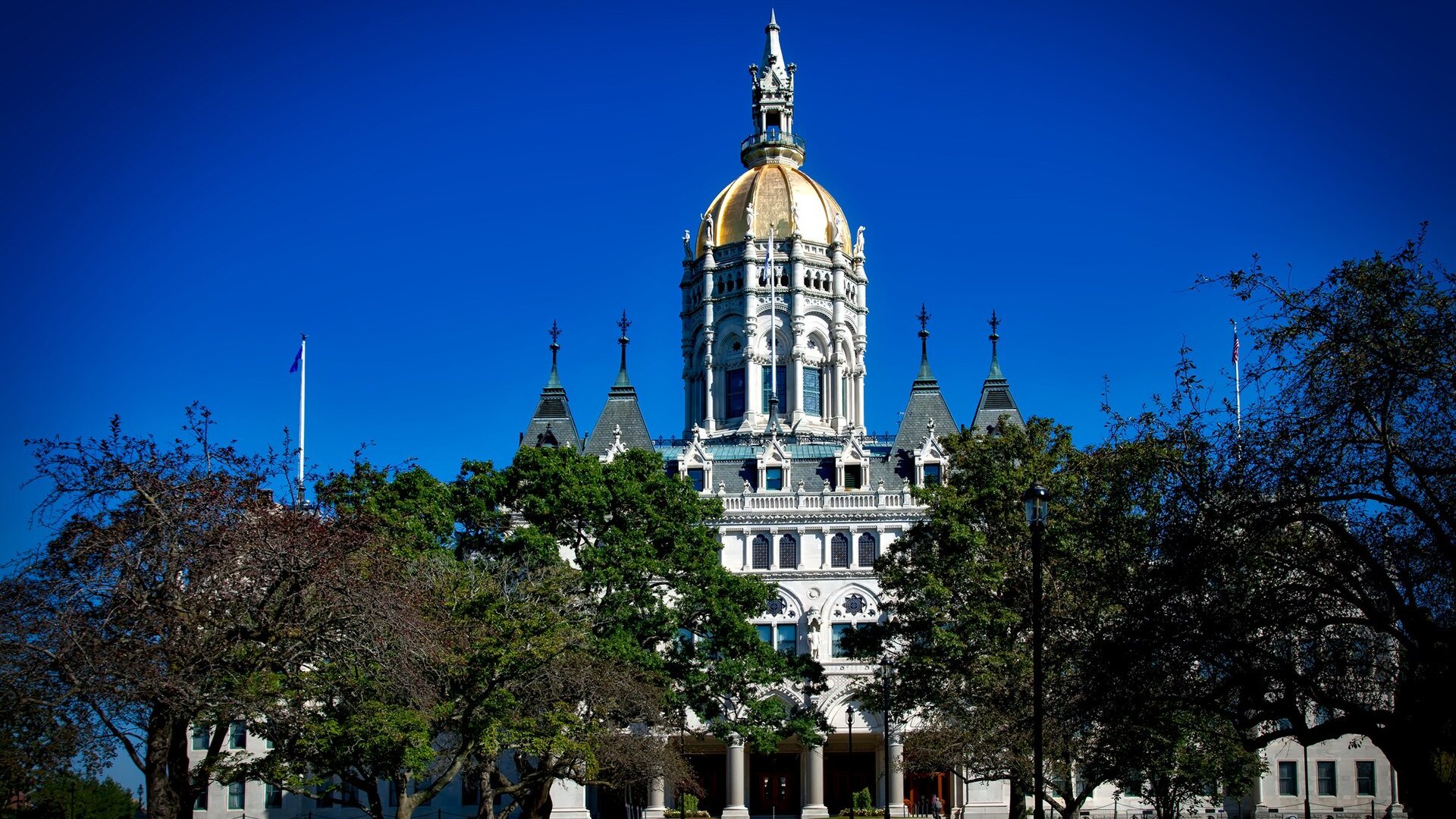
Connecticut offers a current example. In a Nov. 20 report, the legislature’s nonpartisan Office of Fiscal Analysis raised its sales tax estimate for the current fiscal year by $123.8 million, citing consumer spending that has stayed resilient across income levels despite inflation. The analysts noted that high-income households have posted the strongest spending growth, and warned that a stock market correction could reverse that trend.
In Minnesota, Mall of America’s first-hour crowd count points to steady in-person traffic at one of the nation’s largest shopping centers. Weather also played a part elsewhere: a powerful nor’easter disrupted Thanksgiving in New York and the Mid-Atlantic, which may have pushed some shoppers online.
For households, the main takeaway is that bigger discounts are partly offsetting higher prices rather than erasing them. Shoppers in states without a statewide sales tax, including Delaware, Montana, New Hampshire and Oregon, avoid that added cost at the register.
What happens next
Adobe is expected to release its final Black Friday tally over the weekend. Cyber Monday falls on Nov. 30, and Adobe forecasts $15.1 billion in online sales that day, up 6.2%. The National Retail Federation typically publishes its count of actual Thanksgiving weekend shoppers early the following week, and the Commerce Department’s November retail sales report will show whether the holiday start translated into broader consumer strength. Adobe’s full-season tally, covering spending through Dec. 31, is usually released in early January.
Sources
- Associated Press: Neither inflation nor bad weather deters Black Friday shoppers from seeking deals
- Associated Press via Fast Company: Black Friday’s new playbook: Early deals, essentials in carts and AI nudging clicks
- The Epoch Times: Thanksgiving Online Spending Hits Record $7.1 Billion: Adobe
- National Retail Federation: 183 Million Consumers Expected to Shop During Thanksgiving Weekend
- Connecticut Office of Fiscal Analysis: Fiscal Accountability Report FY 27 – FY 30