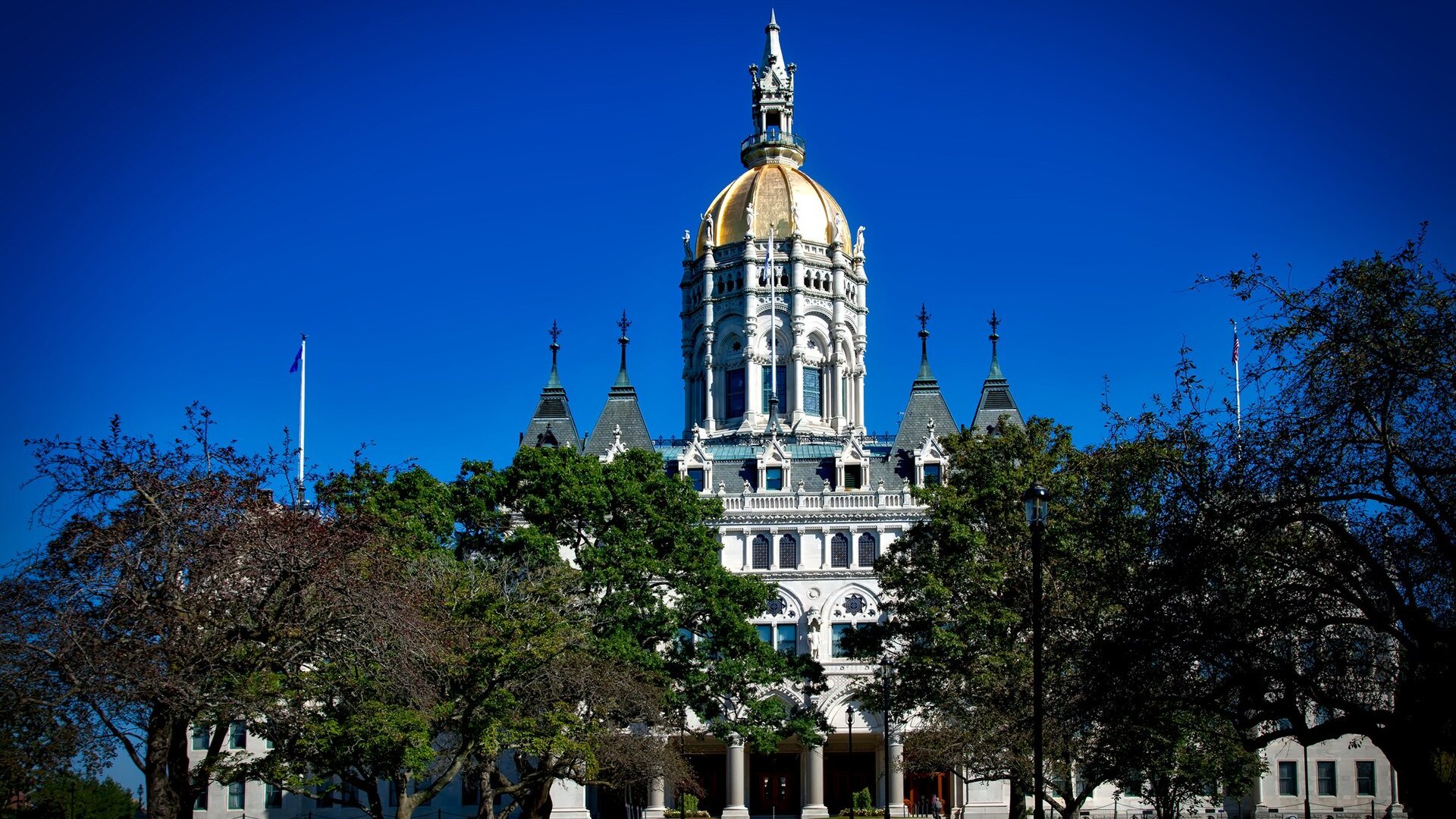
Photo: The New Hampshire Supreme Court building in Concord. SayCheeeeeese via Wikimedia Commons (public domain).
New Hampshire Supreme Court Associate Justice Bryan Gould will step down before the end of the year, the state judicial branch announced Monday, Nov. 23. His departure opens a second vacancy on the five-member court in a matter of months and puts new pressure on Gov. Kelly Ayotte, who must fill both seats as control of the body that confirms judges is about to change hands.
The court system said Gould is leaving because of serious health problems in his family and a medical condition of his own. According to the announcement, his wife suffered a life-threatening aortic dissection and rupture in May that led to a long hospitalization and rehabilitation. Gould himself has a neurocardiogenic condition that is worsened by stress. The branch said he had previously managed it with medication, but the strain of caring for his wife made his symptoms worse.
In a statement released through the court, Gould said he had not pictured ending his time on the bench this way, adding that “my family must come first,” New Hampshire Public Radio reported. He did not give an exact final day.
Gould has already been absent from the bench. NHPR reported that he missed the court’s Nov. 10 oral arguments for health reasons and was not scheduled to take part in arguments set for Tuesday, Nov. 24. The court declined to release more details about his condition.
Ayotte, a Republican, thanked Gould for his service in a brief statement Monday afternoon and wished his family a quick recovery, the New Hampshire Bulletin reported.
A court in transition
Gould’s exit comes roughly 14 months after he joined the court. Ayotte nominated him in August 2025, and the Executive Council confirmed him the following month. He had no prior experience as a judge. He did have a long legal career, including years as a lawyer for the New Hampshire Republican Party and work as a legal adviser to Ayotte during her 2024 campaign for governor, according to NHPR. He also represented Casella Waste Systems as a lawyer and lobbyist.
His nomination drew attention at the time partly because of his age. New Hampshire requires justices to retire at 70, and the Bulletin reported Gould would have reached that limit on Dec. 2, 2028.
The court has already lost its chief justice this year. Chief Justice Gordon MacDonald resigned in September while the state Judicial Conduct Committee was examining a personnel move he arranged. NHPR’s reporting had shown that the arrangement allowed an ally to collect close to $50,000. Part of the committee’s inquiry focused on whether the court’s own public statement defending the payment was misleading.
Gould was one of three justices, along with Melissa Countway and Patrick Donovan, who signed that statement, according to NHPR. The Judicial Conduct Committee has not said whether it opened any inquiry into those three justices, even though some Democrats, including Executive Councilor Karen Liot Hill, have called for one.
Earlier turmoil also shaped the bench. Former Justice Anna Barbara Hantz Marconi was criminally charged in 2024 over efforts to use her influence during an investigation involving her husband. She pleaded no contest to one charge, returned to the court but sat out cases, and left when she reached the mandatory retirement age in February, NHPR reported.
Timeline
- 2024: Justice Anna Barbara Hantz Marconi is charged and later pleads no contest to a single count.
- August 2025: Ayotte nominates Bryan Gould to the Supreme Court.
- September 2025: The Executive Council confirms Gould.
- February 2026: Hantz Marconi reaches the mandatory retirement age and leaves the court.
- September 2026: Chief Justice Gordon MacDonald resigns amid a Judicial Conduct Committee probe.
- Nov. 3, 2026: Democrats win all five Executive Council seats, effective in January.
- Nov. 10, 2026: Gould misses oral arguments, citing health.
- Nov. 23, 2026: The judicial branch announces Gould will step down before year’s end.
Where each side stands
The confirmation math is the central political question. The Executive Council, which must approve every judicial nominee under the state constitution, now has a 4-1 Republican majority. After the November election, it will become a 5-0 Democratic council when new members are sworn in early next year.
Several incoming Democratic councilors told the Bulletin that closer scrutiny of Ayotte’s court picks will be their top priority. Liot Hill, the only incumbent returning to the council, said on election night that she expects a push for accountability on the high court. Councilor-elect Luz Bay, a Democratic state representative, said future Supreme Court nominees should have prior experience on the bench as a baseline.
Ayotte has not named anyone to replace MacDonald. Asked about timing earlier this month, she told reporters she had no set schedule and that her standard for nominees would not change because of the new council. She said she would make an appointment once her judicial selection committee helps her find a strong candidate, according to the Bulletin.
What it means for New Hampshire
For residents and lawyers with cases before the court, two empty seats mean a smaller bench deciding appeals until replacements are confirmed. Because justices can serve until 70, whoever fills these seats could help shape the court’s rulings on state law, elections and government power for years.
The vacancies also set up an early test of how Ayotte and a fully Democratic council will work together. The governor can try to move quickly with the current council, or wait and negotiate with the new one. Either path will influence the makeup of the state’s highest court at a time when public trust in it has been strained by a run of conduct investigations.
What happens next
The current Executive Council has two meetings left, on Dec. 2 and Dec. 16, before the new members take office. State law requires seven days of public notice before the council holds a hearing on a judicial nominee, the Bulletin reported. That leaves Ayotte a narrow window if she wants the outgoing council to act, and she would still need its votes. The council has clashed with her at times despite its Republican majority.
If no nominations are confirmed by mid-December, both seats would go to the incoming Democratic council in 2027. Gould is expected to leave before Dec. 31; the judicial branch has not announced a specific date.
Sources
- NHPR: NH Supreme Court Justice Bryan Gould to resign, citing health concerns
- New Hampshire Bulletin (via News From The States): Gould retiring from New Hampshire Supreme Court
- NHPR: Gould confirmed to NH Supreme Court (September 2025)