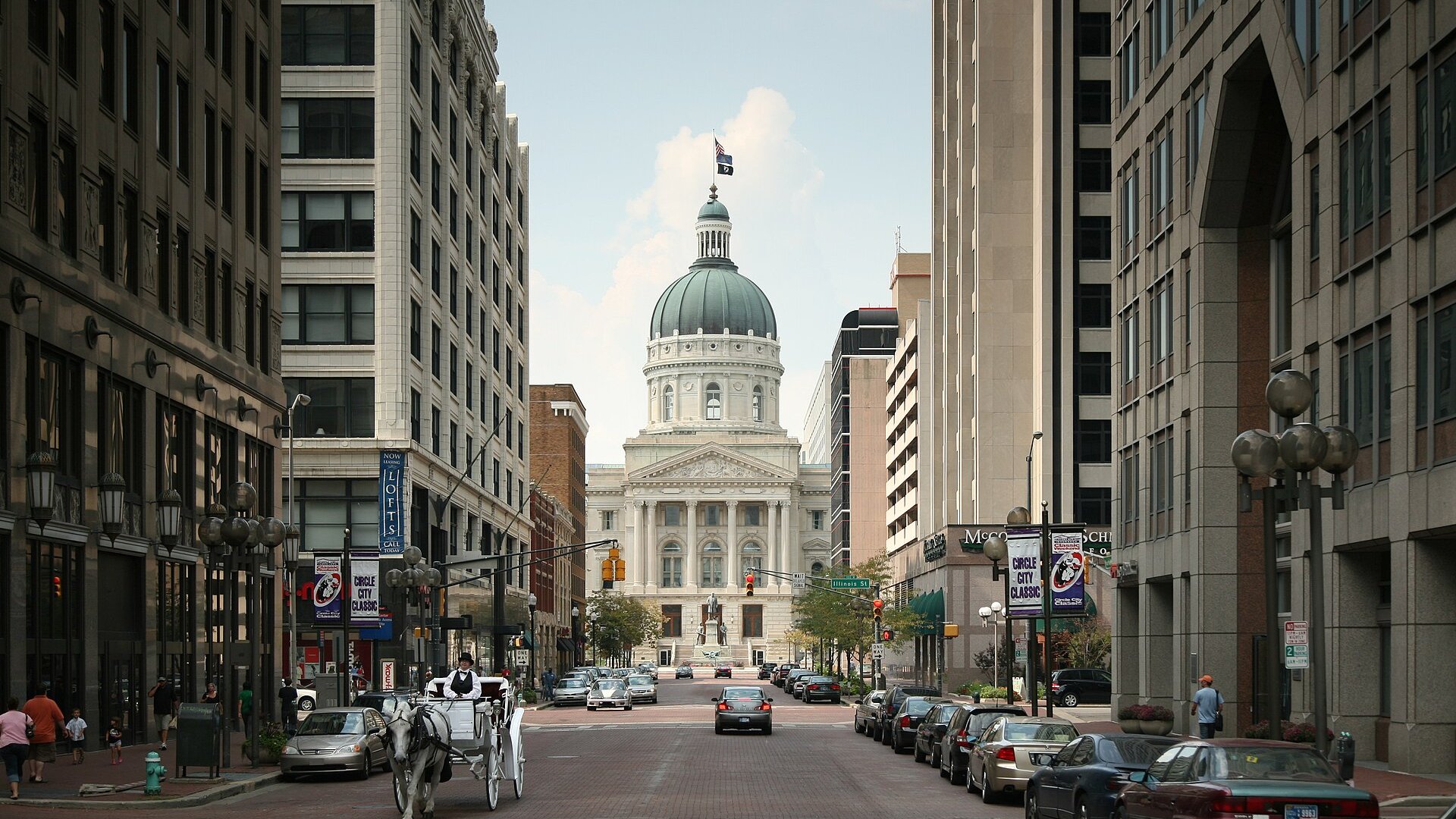
Photo: Thurgood Marshall United States Courthouse in lower Manhattan, home of the 2nd U.S. Circuit Court of Appeals. Kidfly182 via Wikimedia Commons (CC BY 4.0).
A federal appeals court in New York on Monday, Nov. 23, gave President Donald Trump another chance to pull his Manhattan hush money conviction out of the state court system, a step that could eventually let him argue in federal court that presidential immunity requires the verdict to be thrown out.
A three-judge panel of the 2nd U.S. Circuit Court of Appeals sent the case back to a lower federal court and told it to rule promptly on Trump’s request to move the case, according to the Associated Press. The panel found that the late U.S. District Judge Alvin Hellerstein had erred when he refused that request.
The order also has an immediate effect in New York’s state courts. CNN reported that the panel said Trump’s separate state appeal should pause while the question of which court system has jurisdiction is settled. Trump’s lawyer, Robert Giuffra Jr., sent a letter to the state’s Appellate Division on Monday informing it of the ruling and asking that no further proceedings take place there in the meantime, the AP reported.
Key facts
The panel was made up of Judges Raymond J. Lohier Jr., John M. Walker Jr. and José A. Cabranes. Lohier and Cabranes were appointed by Democratic presidents, and Walker by a Republican. The ruling came about a week after the three judges spent more than an hour questioning Trump’s lawyer and a lawyer for the Manhattan District Attorney’s Office.
Hellerstein, who died in October at age 92, had turned down Trump’s requests to move the case three times, most recently in August. In that last decision he wrote that “paying hush money to an adult film star” was not covered by presidential immunity, according to the AP.
Trump was convicted in May 2024 on 34 felony counts of falsifying business records. Prosecutors said the records were falsified to hide a $130,000 payment to adult film performer Stormy Daniels, whose claim of an affair threatened his 2016 campaign. Trump denies her claim and says he did nothing wrong. The verdict made him the first U.S. president convicted of a crime. He received an unconditional discharge, meaning no jail time, fine or probation.
Trump’s legal team welcomed the decision. A spokesman said Trump “appreciates the Second Circuit’s prompt and correct ruling,” CNN reported. The Manhattan District Attorney’s Office, which brought the case, declined to comment.
The arguments on each side
Trump’s lawyers argue that federal officers, including presidents, are entitled to have charges tied to their time in office heard in federal court. Giuffra told the panel that prosecutors at the 2024 trial relied on the kind of evidence about official acts that the U.S. Supreme Court later ruled off limits, including testimony about Oval Office conversations, White House workflow and Trump’s social media posts. He also argued that prosecutors’ description of the payment as an illegal campaign contribution under the Federal Election Campaign Act belongs in federal court.
Giuffra urged the judges to act quickly. Without federal intervention, he said, Trump would likely have to wait years for New York’s appellate courts to finish before he could take the case to the Supreme Court.
The Manhattan DA’s office sees it differently. Steven Wu, who leads the office’s appeals division, asked the panel to uphold Hellerstein’s ruling and leave the case in state court. Prosecutors have said Trump’s handling of the Daniels matter broke state law and had nothing to do with his official duties.
Background and timeline
The fight over where the case belongs has been running for more than three years. Here is how it unfolded, based on reporting by the AP, CNN and Fox News:
March 2023: A Manhattan grand jury indicts Trump. Within weeks, he asks to move the case to federal court. Hellerstein says no.
May 2024: A state jury convicts Trump on all 34 counts.
July 2024: The Supreme Court rules that presidents cannot be prosecuted for official acts and that prosecutors cannot use official acts as evidence to prove unofficial conduct was illegal. Trump renews his bid to move the case.
November 2025: A different 2nd Circuit panel, which also included Lohier, orders Hellerstein to take another look, saying he had not weighed important issues tied to the immunity ruling.
August 2026: Hellerstein denies the request for a third time.
Nov. 5, 2026: Trump’s lawyers argue his traditional state appeal before New York’s Appellate Division, the state’s mid-level appeals court. That court has not ruled.
Nov. 23, 2026: The 2nd Circuit panel sides with Trump on the procedural question and sends the matter back for a prompt ruling.
What it means for New York
The decision puts New York’s own courts on hold, at least for now. The Appellate Division heard Trump’s appeal earlier this month, and the AP reported that it could be blocked from ruling indefinitely under Monday’s order. That leaves the state’s handling of its most closely watched criminal case in limbo while federal judges sort out jurisdiction.
For the Manhattan District Attorney’s Office, the ruling raises the prospect that a conviction won in a state courtroom could end up being reviewed, and possibly erased, by federal judges applying the Supreme Court’s immunity decision. For New York voters and taxpayers who have followed the case since 2023, it means the final outcome may be years away or could come much sooner, depending on how the next federal judge rules.
CNN noted that if the case moves to federal court, the 2nd Circuit would likely take up the merits, and any further appeal would go straight to the Supreme Court. That path would skip the years of state-level review that would otherwise have to come first.
What happens next
A federal district judge must now rule promptly on whether the case can be moved. Because Hellerstein has died, the matter will be handled by another judge in that court. If that judge grants Trump’s request, the case would return to the 2nd Circuit, where Trump’s lawyers would argue that the verdict should be thrown out on immunity grounds.
If the request is denied again, Trump could appeal to the 2nd Circuit once more. Either way, the state appeal is expected to stay frozen until the jurisdiction question is resolved. The Manhattan DA’s office has not said publicly whether it will seek further review of Monday’s order.
Sources
- AP News: Trump’s hush money appeal gets new life in federal court
- CNN: Trump gets another shot in his quest to overturn hush money conviction
- Fox News: Appeals court orders review of hush money case over presidential immunity (Nov. 2025)